Parents, what’s up?
Sometimes parents make a big mistake when it comes to detachment, letting go, and not enabling their child. A lot of times, parents are trying to save, rescue, or help their child, but it becomes counterproductive. The child is not learning the lesson the parent is trying to teach.
Parents often use punishments, rewards, rationalizing, logic, lecturing, or attempts to “help them see the light.” They’re trying to communicate: “Hey kiddo, if you would just do X, Y, and Z, you’d have better results.” But even though these methods are not working, parents often continue doing them over and over again for months or even years.
What parents are really trying to do is transfer ownership.
What’s up everybody? My name is Seth Perler from SethPerler.com. I’m an executive function coach in Colorado, and I help struggling students navigate this thing called education.
In this video for parents, I’m going to talk a little bit about detachment, letting go, and transferring ownership.
For a lot of parents, this is really hard. You are the one who has the buy-in for what your child needs to do. You are the one taking ownership for them. They’re not motivated, so you’re trying to motivate them as an external force. You are being their executive function. You are being the responsible party for them.
You pick up the slack when they struggle. You prevent them from falling.
So the real question becomes: how does a parent transfer ownership?
At first, when you have an infant, you take care of them 100%. They need you completely. But as kids become older, more mature, and more independent, your goal changes. You want them to become independent, healthy, successful adults who can manage their own lives and have a fantastic future.
But when you watch your child struggling, you may feel frustrated or anxious because things are not happening the way you think they should. And maybe you’re right about that. But the important question is not whether you’re right — the question is whether what you are doing is actually helping transfer ownership to your child.
You see the future from a mature perspective. You know your child will need to apply for jobs, complete homework, advocate with teachers, and manage responsibilities. You understand why these things matter. Your child often doesn’t see that yet.
So how do we transfer ownership?
When a child struggles with executive function, this becomes especially difficult. You can clearly see the potential consequences ahead: getting fired, struggling financially, relationship problems, career issues, or academic struggles. You see the future because you have maturity and life experience. Your child doesn’t yet.
That creates anxiety. You feel like you need to help them figure it out.
But again, your goal is not to rescue them forever. Your goal is to transfer ownership.
Think about transferring ownership of a car. You sell the car, sign paperwork, and ownership transfers completely. If the new owner gets into an accident or runs out of gas, it’s their responsibility now.
Parenting doesn’t work that cleanly. It’s messy.
You want your child to take ownership of their life, but you also don’t want to completely let go and watch everything fall apart. You want to let go safely.
I am not suggesting that this is easy. It’s not.
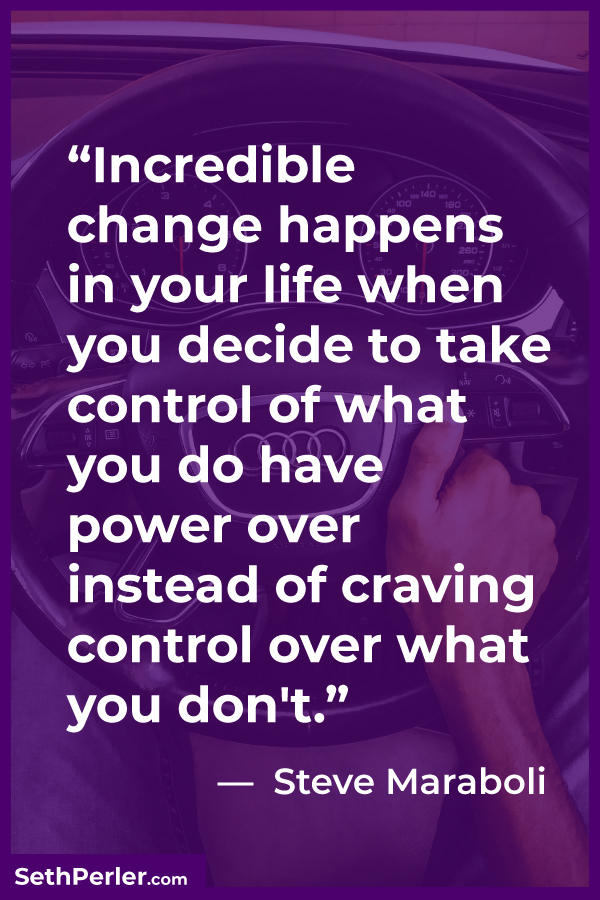
But what I am suggesting is that you keep your focus on the real objective. Your objective is not to fix every problem or prevent every failure. Your objective during this chapter of parenting is to transfer ownership.
Here’s what I want you to do after this video:
Write down somewhere visible — on a note card, refrigerator, or phone reminder — the phrase:
“My objective is to transfer ownership.”
The reason this matters is because it gives you a filter.
Before you lecture, rationalize, punish, reward, or try to convince your child, pause and ask yourself:
“Is what I’m about to do helping transfer ownership?”
Is the consequence helping?
Is the reward helping?
Is the lecture helping?
Is the logic helping?
Or is it simply creating more resentment, more conflict, and more dependence?
A lot of times parents say things like:
“If you would just do it this way, your life would be easier.”
“Why can’t you just do X, Y, and Z?”
“You need to talk to the teacher.”
“You need to check your work.”
But you have to ask yourself honestly:
Is it working?
I know this is hard. It’s incredibly hard to watch your child struggle when you can clearly see solutions that seem obvious to you. You can see how much easier their life could be if they would just make different choices.
But the key question is:
Are your efforts helping your child take ownership of their life, or are they unintentionally holding them back?
That’s the filter I hope you leave this video with.
If you can pause in the moment and ask yourself whether your actions are helping transfer ownership, it can completely reframe the conversations and interactions you have with your child.
Ultimately, what you really want is to help your child launch into a happy, healthy, successful future with the executive function skills they need to pursue their hopes and dreams — while also having a good life right now.
My name is Seth Perler from SethPerler.com. I’m an executive function coach in Colorado. If you haven’t signed up already, I’ve got a lot of free resources on my site. I send out updates every week and create videos packed with practical solutions to help you and your children.
Have a great day.