

Please CLICK above to share.
In this video, I discuss:
- What Emotional Regulation is
- How “safety” is a key message
- The stress kids deal with nowadays
- What teachers are expected to do
- How to help these kids
- What’s going on with the brain and nervous system
- Fight, flight, freeze, faint
- The amygdala
Love my work and want to give? Click here!
To support me, please CLICK at the bottom to share. Click here to visit my official YouTube Channel & subscribe if you want! Thank you — Seth
Video transcript
Hey, what’s up teachers? This is Seth with sethperler.com, and I’m here to talk to you today about something called emotional regulation—something I wish teacher training programs spent more time covering.
I have a picture here of the head and the heart because we’re not just dealing with students’ brains; we’re dealing with their hearts, too.
So, how do kids regulate emotions?
The first thing I’ll tell you is that many kids in school today are stressed out. As you well know, students are dealing with a tremendous amount of input. The number of details they are expected to manage is astounding.
As teachers, you often get caught in the middle because you’re expected to cover as much content as possible. Work keeps piling up, and sometimes you don’t have much choice about how much material you need to deliver.
Some students with strong executive function skills handle this very well. Of course, many of those students become overachievers and perfectionists, and sometimes struggle later in adulthood because they haven’t learned enough about self-care.
But those aren’t usually the students I work with.
I work with students who struggle. I work with students who have executive function challenges, ADHD, autism, dyslexia, sensory processing issues, bipolar disorder, and many other learning and developmental differences.
For these students, the details are coming at them like they’re drinking from a fire hose. They simply cannot manage everything being thrown at them.
About a third of the way through the semester, it becomes obvious that they’re falling behind. Then they’re swimming upstream for the rest of the semester.
By middle school, many are already frustrated. By high school, many have either given up or developed survival strategies to get through the day.
These kids are suffering.
What Happens During Emotional Dysregulation?
Emotional regulation has to do with emotions.
When students are overwhelmed, that is an emotional experience.
Sometimes their stress is visible. They may act out, become disruptive, or show obvious signs of distress.
Other times, it’s invisible.
Many students withdraw, put on a poker face, and hide what they’re feeling. You may have no idea that they’re emotionally dysregulated even though they are struggling internally.
One of the jobs of the nervous system is to determine whether we are safe or unsafe.
When students become overwhelmed by school demands, they often feel unsafe—even though there is no actual danger present.
There isn’t a tiger chasing them.
But the part of the brain responsible for detecting threats doesn’t always know the difference.
The Role of the Amygdala
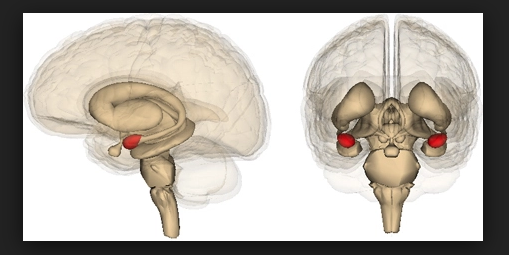
There is a small structure in the brain called the amygdala. The word amygdala means “almond” in Latin because it is approximately the size and shape of an almond.
The amygdala constantly monitors for danger.
Imagine that a student suddenly feels overwhelmed because:
A test is coming up.
They have too much homework.
They’re falling behind.
They’re being bullied.
They’re lonely.
They’re anxious.
They’re angry.
The brain receives the message:
“We’re not safe.”
The amygdala responds:
“Okay, something is wrong. We need protection.”
The amygdala then activates the body’s stress response.
It sends signals to the adrenal glands, which sit on top of the kidneys.
The adrenal glands release adrenaline.
The adrenaline moves through the heart and into the muscular system, preparing the body for:
Fight
Flight
Freeze
Faint
This response evolved to help humans survive danger.
The problem is that the student is sitting safely in a classroom.
There is no tiger.
Yet their body is reacting as though there is.
Why Learning Becomes Difficult
When students are emotionally dysregulated, their brains are focused on survival rather than learning.
Imagine a student who:
Was yelled at by a parent before school.
Feels rejected by peers.
Was embarrassed by a teacher.
Is anxious about grades.
Is depressed or lonely.
Their brain is trying to protect them.
Do you think they’re going to be able to focus and concentrate at their best?
Probably not.
They’re trying to learn, but it’s like learning through a series of filters. Much of what you’re teaching isn’t getting through because their emotional state is interfering with the learning process.
How Can Teachers Help?
There are many ways to help students regulate emotions:
Breathwork
Mindfulness
Meditation
Co-regulation
Co-regulation means that you, as the adult, model calmness and emotional regulation yourself. Students often learn regulation by experiencing it from regulated adults.
There are many additional strategies, but I won’t go into all of them in this video.
The Most Important Thing at the Beginning of the School Year
In my opinion, the number one priority for any classroom at the beginning of the year is helping students feel emotionally safe.
For most students, it takes four to six weeks to really get to know a teacher and determine whether they feel safe with that person.
That process of building trust and emotional safety is critical.
Some teachers make it a priority.
Others feel pressure to jump immediately into curriculum because they have so much content to cover and so many expectations placed on them.
I understand that pressure.
But to me, creating emotional safety is the most important investment you can make at the beginning of the year.
The safer students feel in your classroom, the more they will be able to learn throughout the entire school year.
That foundation sets the tone for everything that follows.
Anyway, I just wanted to make a quick video about emotional regulation.
Please comment below and tell me what you think.
Teachers, tell me what videos you’d like to see. Tell me what questions you have. Tell me what you want to know about emotional regulation and how I can help.
I hope you have a great school year.
Take care.