

Please CLICK above to share.
Naturalistic Learners are students who have strengths in intelligence related to nature. They may be highly connected to nature in many ways: They may have a deep love of plants, animals, people, rocks, nature, being outdoors, camping, hiking, rock climbing, biology, astrology, dinosaurs, etc..
These kids often struggle in school, and unfortunately, their naturalistic strengths are often not valued in our “standards-based” culture.
Here are links to the main concepts I mentioned in this video:
- Howard Gardner the guy who came up with Multiple Intelligence Theory
- Maslow’s Hierarchy of Needs and Self Actualization
- What are Visual-Spatial Learners? As defined by Linda Silverman.
- Right-brained, global, big picture learners. A concept by Jeffrey Freed.
- Content, process, product. A framework for teaching.
- Gap years. Blake Boles’ blog, he’s got some great resources.
- Overexcitabilities. Concept by Dabrowski.
- Understanding “emotional regulation”.
Love my work and want to give? Click here!
To support me, please CLICK at the bottom to share. Click here to visit my official YouTube Channel & subscribe if you want! Thank you — Seth
Video transcript
Good morning from Moab, Utah. This is Seth from SethPerler.com, and I’m doing some road-tripping right now.
I’m in the amazing Moab, Utah, and the rocks that you see behind me are, believe it or not, 2,200 feet below the rocks across the street. They used to be the exact same height. The ones right here and the ones across the street were actually the same height, but six million years ago there was a big crack in the ground.
That crack is called the Moab Fault, and that fault runs straight through here. In fact, that’s actually the fault right there where that road goes.
Anyhow, the reason I’m telling you this—there is a reason—is that I want to talk a little bit about Multiple Intelligence Theory and some things that go along with it.
There’s a guy named Howard Gardner. I think he’s in the Northeast somewhere; I don’t quite remember. I was really into his work for a while, and then I integrated it and mixed it with a bunch of other paradigms that I really like.
One of the things Gardner talks about is multiple intelligences. He originally talked about seven intelligences, then I believe he added an eighth, and I think he eventually developed more. However, if I’m remembering correctly, he didn’t publish all of that later work because he couldn’t identify specific areas of the brain associated with those intelligences.
For example, if there is such a thing as spiritual intelligence, he couldn’t locate a specific part of the brain for it. But supposedly, he found areas of the brain connected to the other intelligences.
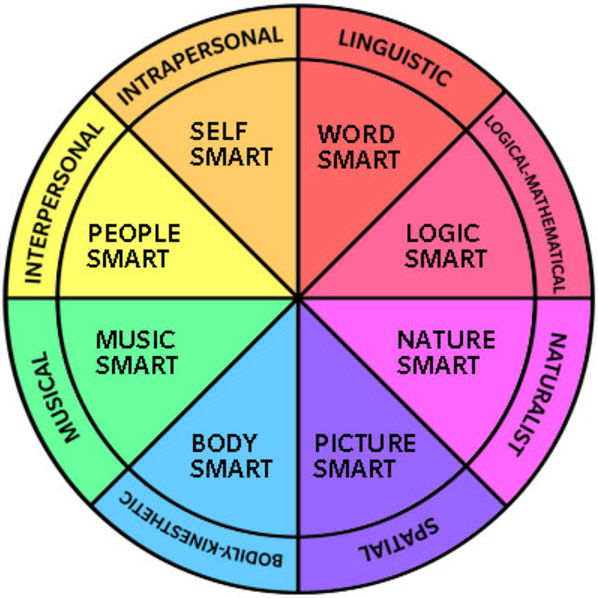
There is logical-mathematical intelligence. There is linguistic intelligence. There is interpersonal intelligence and intrapersonal intelligence. There are these different intelligences, and one of them is called naturalistic intelligence.
I completely geek out on science, nature, rocks, plants, and animals. I always have.
I’ve noticed in my practice that I sometimes work with students who really struggle in conventional classrooms but are brilliantly gifted in naturalistic ways—in their relationship with nature.
One of the tragedies, as you well know, is that when kids struggle in school, they start to feel bad about themselves. They eventually cross a threshold where they begin to say that learning isn’t fun.
The reality is that it’s not learning that isn’t fun—it’s the experience they’re having in school that’s not fun for them.
They start to resent learning. They start to resent school. They don’t want to try anymore. They begin giving up on certain classes or subjects.
Obviously, that’s tragic.
The most tragic thing is when they really give up on themselves. They don’t self-actualize, and they fail to understand that their strengths are tremendous.
Those strengths can be developed. Their naturalistic abilities can be developed. They can create a career—or even multiple careers throughout their lifetime—that empower them to be happy, contribute to the world, and become the fullest version of themselves.
I took some notes today, and I want to go through a few of them about these particular students.
These students tend to struggle with linear systems.
Again, they often appear to be poor students in conventional educational settings. They appear to be struggling academically and don’t really shine in those environments.
They struggle with linear systems. That can be a school system, or it can be a teacher’s classroom structure.
They also tend to be very visual-spatial learners.
They see things differently.
They’re seeing things in their minds that can’t be measured on bubble tests, classroom worksheets, or busywork assignments.
They’re able to visualize and imagine things in ways that are difficult to assess.
For example, I have one student who’s a brilliant rock climber.
In rock climbing, there’s something called reading the rock. Before you climb a route, you actually have to study it. You have to visualize yourself moving up the rock and determine where your hands and feet will go.
This student can do that brilliantly.
His ability to visualize isn’t measured on a test, but it’s an incredible skill.
These students also tend to be very right-brained, global, big-picture thinkers.
They may struggle with details, but they’re excellent at understanding underlying concepts.
And once they truly master an area, even if they can’t articulate it verbally or in writing, they can often demonstrate their mastery through action.
This brings me to a concept called content, process, and product.
In education, there’s an idea that learning involves three components:
Content – what you teach.
Process – how you teach it, or how a student learns it.
Product – how a student demonstrates their learning.
For these kids, if teachers can provide alternative ways to access content, process information, and demonstrate learning, they can become much more successful.
If you can make all three of those things—content, process, and product—more naturalistic and more relatable to them, you can help them thrive.
So think creatively about how you can adapt content, process, and product for these students.
Let’s see, what else do I have here?
Ah, yes.
These kids are often very intuitive, very sensitive, and very deep feelers.
That reminds me of a psychologist named Kazimierz Dabrowski.
Dabrowski has passed away, but he left the world with a concept called overexcitabilities, which he observed in gifted and talented children.
What he really meant by overexcitabilities, at least in my interpretation, was heightened sensitivities.
There are different kinds of sensitivities—sensory sensitivities, emotional sensitivities, and others.
What I want to focus on here is the emotional side.
These kids tend to feel things very deeply.
If they feel criticized by a teacher, a school, or another authority figure, they often internalize that criticism very, very deeply.
They’re strongly affected by situations that overwhelm them emotionally, especially when they feel misunderstood.
A lot of these kids genuinely feel misunderstood.
If you’re interested in this topic, look up Dabrowski and overexcitabilities. It can help you understand how sensitive some of these children really are.
I think, as adults, we sometimes forget how intensely life can feel when you’re a kid.
What else do we have here?
Oh, yes.
With these kids, it’s important to give them different experiences.
One of the great opportunities for some of these students is taking a gap year.
They often need experiences that allow them to learn differently.
Trust me—kids can learn and grow during a gap year just as much as, and sometimes more than, they can in a university setting.
There are also colleges and educational programs that are much more experiential.
In fact, experiential learning is a great keyword to research.
There are schools designed specifically for students like this. These programs provide opportunities to learn outdoors, travel, engage with nature, and participate in hands-on experiences.
Students might spend time in the American Southwest, explore wilderness areas, participate in outdoor education programs, or engage in environmental projects.
They might work at ski resorts.
They might work for rafting companies.
They can gain incredible life skills through experiences that look very different from traditional classroom learning.
Send them to camp.
Take them camping.
Get them outdoors as much as possible.
If nature is where they thrive, then help them develop a career and lifestyle that includes what they love.
Don’t force them into a box that doesn’t fit them.
It’s frustrating to watch kids get pushed off their natural path and end up in environments that clearly aren’t aligned with who they are.
Sometimes they get funneled into corporate careers or other situations that simply aren’t their calling.
The system can unintentionally push people in the wrong direction.
We see that all the time.
Next, get them involved in service-oriented experiences outdoors.
Whether it’s working with animals, horses, helping younger children, or participating in outdoor community projects, many of these kids thrive when they’re contributing to something meaningful.
A lot of them are fantastic with younger children, so look for opportunities where they can mentor, teach, or support others.
Get them traveling.
Get them camping.
Get them outside.
For example, right behind me is Arches National Park. A student could spend a week backpacking out there and learn an incredible amount.
They can get away from all the noise and distractions. Their nervous systems can settle down and regulate.
That’s the next thing I want to emphasize:
Give them experiences outdoors—or, going back to Multiple Intelligence Theory, naturalistic experiences—that help regulate their nervous systems.
A lot of these kids are going crazy sitting at desks all day.
They need movement.
They need exploration.
They need freedom.
They need real-world experiences.
When they spend time in environments that fit how they’re wired, they’re often less stressed, calmer, and more emotionally balanced.
They tend to have better executive functioning, better focus, and ultimately better lives.
Learning how to regulate themselves is one of the most important skills they can develop.
And I think that’s about it.
As you can probably tell, I absolutely geek out on being outdoors.
I am completely in heaven out here.
To me, it’s breathtaking.
It never gets old.
The landscapes, the geology, the wildlife, the feeling of being connected to something bigger—it’s amazing.
I hope you’re having an awesome day.
Parents, teachers, and anyone working with these kids: remember that intelligence comes in many different forms.
Just because a child doesn’t shine in a traditional classroom doesn’t mean they aren’t gifted.
Sometimes their gifts simply aren’t being measured.
Help them discover those gifts.
Help them develop those gifts.
Help them build a life around those gifts.
And don’t let them believe that their struggles in school define who they are.
I hope you’re having an awesome day, and I’ll see you soon.
The Executive Funciton Pack
Practical strategies for parents to help their child build motivation, independence, and confidence
Student Course
My step-by-step methods broken down for students
Coaching
Get executive function coaching support
Become an EF Coach
For teachers, tutors, parents who want to become a certified, profitable Executive Function Coach